







PadelGuru analysis
Verdict
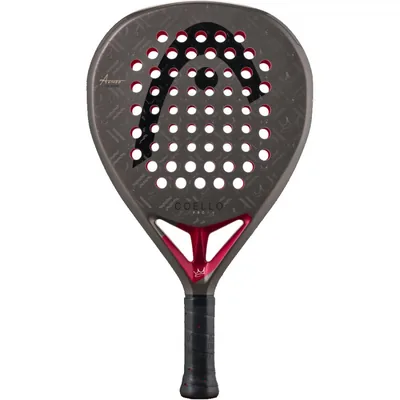
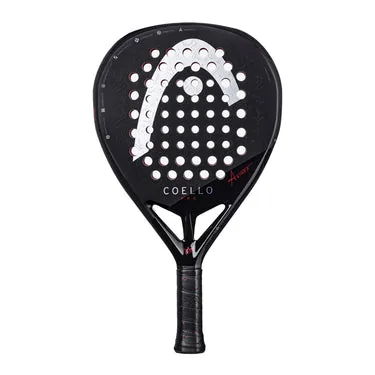
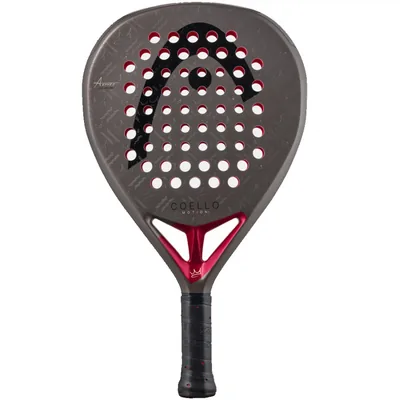
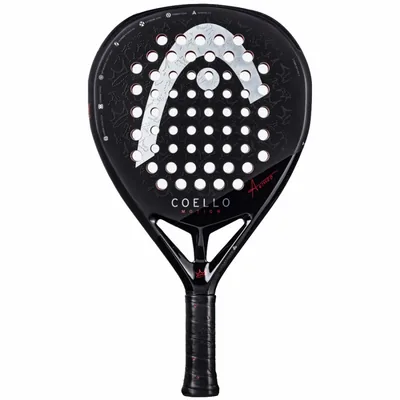
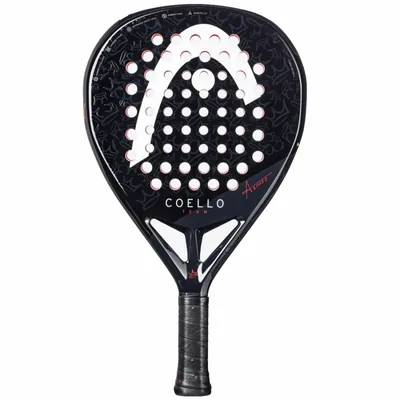
The Head Coello Pro 2026, Arturo Coello’s racket, is worth buying if you’re an expert player who wins points in the air: on the vibora, the bandeja and the smash, few power rackets can match it. In return, it gives up maneuverability. It’s a head-heavy, diamond-shaped racket, and while it moves a little better than the 2025 model, it still takes arm strength and good technique once the rally speeds up.
If you spend a lot of time defending, or you struggle to get the racket up in time at the net, it will ask more of you than it gives back.
- Best for
- Expert left-side players who close out points with the vibora, bandeja and smash.
- Not for
- Defensive players, anyone who needs a fast racket at the net, and players with arm or shoulder problems.
Strengths
- Deep viboras and bandejas with very little wrist action
- Very fast flat smash thanks to the leverage
- Larger-than-average sweet spot that forgives off-center hits
- Huge ball speed on attacking volleys
- Plush feel for a power racket
Weaknesses
- Slow to react when you're defending fast balls
- Some block volleys fly long when the pace is high
- Tires the arm and shoulder over long matches
- Low volleys take some getting used to because of the head-heavy balance
01 Baseline: easy depth, slow reactions
From the back of the court, the ball comes off the face with very little effort. The Power Foam core is highly reactive, so simply guiding the shot is enough to send the ball deep without much wrist action. The sweet spot, larger than on a standard racket, also helps in defense: a slightly off-center hit is punished less than with other rackets of similar stiffness.
What it lacks is speed in defense. When the ball is on top of you and you have to react, the weight in the head makes the racket arrive late, and your return can easily float up and leave you at your opponent’s mercy. This isn’t a racket built for spending the whole match defending off the back glass.
02 Volleys: explosive on the attack, tricky on the block
On attacking volleys, it’s hard to ask for more. When you need to put away a mid-height ball or finish the point with a flat volley, the ball exit and the head-heavy balance send it off at a speed few rackets can reach.
The block volley is a different story depending on the pace. At medium speed, the sweet spot and ball exit let you return safely with almost no swing. When the exchange speeds up and your hands are moving fast, the racket gives back more than you want and some balls fly long. With a weight of 360 to 380 g and a head-heavy 272 mm balance, low volleys below the net are the shots that take the most adjustment: you have to get the head of the racket down in time, and that isn’t easy.
03 Overheads: the vibora is the main weapon
The vibora and the bandeja are where it performs best. It needs less wrist action than other power rackets to send the ball deep, and the large sweet spot lets you string together good shots even when contact isn’t perfect.
On the flat smash, the ball shoots off the face and the leverage from the head-heavy balance does a lot of the work, so you don’t need flawless technique to hurt your opponent. The catch is that it takes some effort to start the swing and get the ball up. And if you’re coming from stiff rackets, you’ll notice that when you hit flat out, the power doesn’t keep climbing the way it does with them: its strength is the fast, accelerated smash rather than raw power.
04 Feel and comfort: plush, but heavy on the shoulder
With its Carbon Hybrid face, the feel is medium, with a plush sensation at impact that makes it seem softer than it really is, and the soft butt cap on the handle adds a bit of comfort. Its weak point for comfort is the load: because of its weight and balance, your arm and shoulder take more punishment than with other rackets, especially in matches full of volleys and smashes.
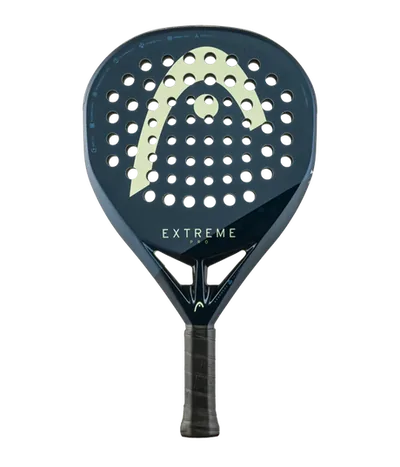
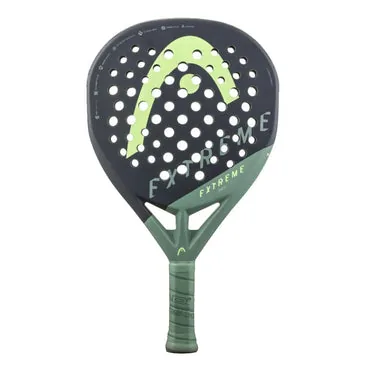
The 3D textured finish, with a crown pattern, is more pronounced and more evenly spread than on the 2025 version, and it gives enough grip to slice the ball. It isn’t especially aggressive, though: it bites less than the raised dot pattern on the Head Extreme Pro.
05 Versus the 2025: livelier and a little lighter
The 2026 weighs a little less than the Coello Pro 2025 and moves better despite keeping the head-heavy balance, though it’s still nowhere near as agile as a control racket. The core is more reactive, so the ball comes off with a shorter swing, while the sweet spot barely changes. It also debuts an interchangeable wrist cord.
That extra liveliness has a downside: on fast block volleys there’s a little less control than with the 2025 if you speed up your hands. If you’re coming from the previous version, you’ll find it friendlier from the baseline and on the bandeja, and it’ll be easier to sustain a long run of overheads.
06 Built for the left-side player who rules the air
We see it mainly in the hands of an expert left-side player who wants help in the air and has the physical strength to handle a head-heavy racket. It’s best not to add weight to it: with an overgrip it loses even more maneuverability.
In terms of ball exit, it outperforms rackets like the Hyper Pro or the Hack and comes close to a Metalbone Hard, albeit with a different feel and less rebound in fast exchanges.
Frequently asked questions
- What racket does Arturo Coello use?
- Coello plays with the Coello Pro 2026. It's a head-heavy, diamond-shaped racket with a very lively face, designed to dominate the overhead game.
- Is the Coello Pro 2026 stiff or soft?
- Somewhere in between. The feel is medium and impact comes across as cushioned, so players used to stiff rackets will find it a notch softer.
- What's new in the Coello Pro 2026 compared with the 2025?
- It's slightly lighter and adds a more reactive core, a soft butt cap, an interchangeable wrist cord and a more pronounced texture. You get more ball exit and an easier time from the baseline, at the cost of some control on high-pace blocks.
- How much does the Coello Pro 2026 weigh?
- It weighs 360 to 380 g, with the mass concentrated toward the head. It isn't light in the hand, so you need to be early on defensive shots and at the net.
- Coello Pro 2026 or Head Extreme Pro: which is better?
- They're closely matched in defense and on the vibora. The Coello Pro offers more ball exit, a slightly bigger sweet spot and a softer feel, while the Extreme Pro is stiffer and easier to handle.