







PadelGuru analysis
Verdict
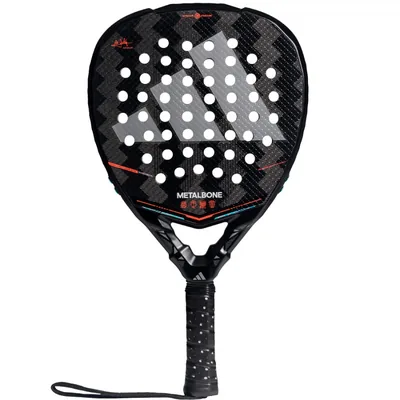
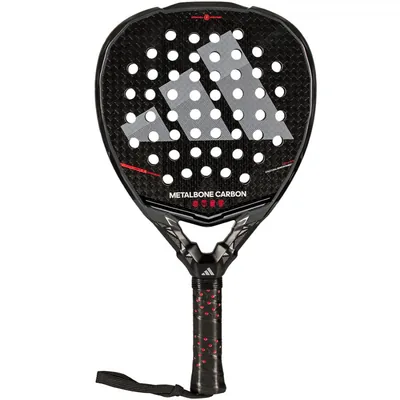
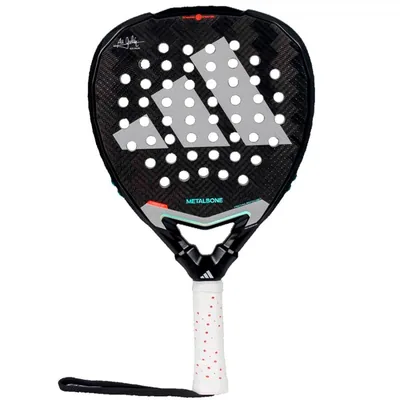
The Adidas Metalbone 2026, Alejandro Galán’s racket, is built for advanced attackers who want to hit hard without working for it. The ball flies off the face even on a short swing, and the sweet spot is far more forgiving than you’d normally expect from a diamond-shaped racket. The trade-off is that ball speed is hard to judge, and this is not a racket that moves itself.
We recommend it if you want pace without straining your arm and you know how to shorten your swing when the point calls for patience. If your game is built on waiting out rallies and dropping dead balls, you’ll struggle with it.
- Best for
- Advanced attackers who want easy smashes without needing a fast arm swing.
- Not for
- Control players who need to judge ball speed precisely or move quickly at the net.
Strengths
- Power without needing much arm speed
- Very large sweet spot for a diamond-shaped racket
- Smash is easy to power up and forgives off-centre hits
- Digs out awkward balls from the back of the court with little effort
- 3D textured finish that grips the ball even in the heat
Weaknesses
- Ball speed is very hard to control
- Head-heavy: sometimes arrives late at the net
- Block volleys bounce off the face more than they should
- Bandejas and viboras can sail long into the back glass
01 Baseline: rescues on a minimal swing
In defence, the Metalbone 2026 gets you out of tight spots with ease. You arrive late to a low ball by the back glass, take the smallest of backswings, and the ball still makes it across the court. With that much ball exit and such a large sweet spot, it’s easy to strike cleanly almost everything that comes your way.
The 13 cm grip is the least natural part of the racket back here. On defensive shots it feels long and takes some getting used to, although how easily the ball comes off the face partly makes up for it.
02 Volley: solid punch, slightly slow reactions
At the net, the long grip and the weight give the volley a heavy, solid punch, the kind you enjoy when you have time to set up. The trouble starts in fast exchanges: at 345 to 372 g with a head-heavy balance (272 mm), the head sometimes gets there a fraction late in its stock setup.
On block volleys the ball rebounds more than you’d like. The racket tends to send it back deep, so soaking up a smash or dropping the ball short takes very good hands.
03 Overheads: easy smash, bandeja that runs long
The smash is, in our view, its best shot. It’s easy to power up, the ball leaves the face at high speed without forcing your arm, and thanks to the large sweet spot a slightly off-centre hit doesn’t ruin the shot.
On the bandeja and vibora the sweet spot is just as easy to find, and the ball carries deep on its own. That’s exactly the risk: if you don’t ease off, it reaches the back glass too much and hands your opponent a comfortable ball. To hold the net with your bandeja, you have to consciously shorten your arm.
04 Feel: soft, lively and deep-sounding
The feel is medium, leaning soft, with plenty of pop: it sends the ball back quickly without feeling stiff. The EVA Soft Performance core has a lot to do with that, because if you don’t generate much arm speed you get power sooner than you would with a stiff foam. On the Carbon Alum 16K face, contact sounds full and deep.
The finish is a fine 3D texture over a glossy face. It does its job without drawing attention, and the ball doesn’t slip even in summer heat.
05 Versus the HRD: easier, less precise
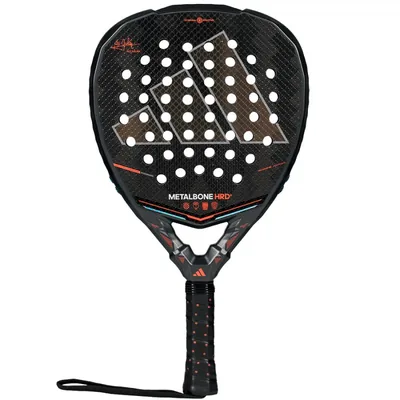
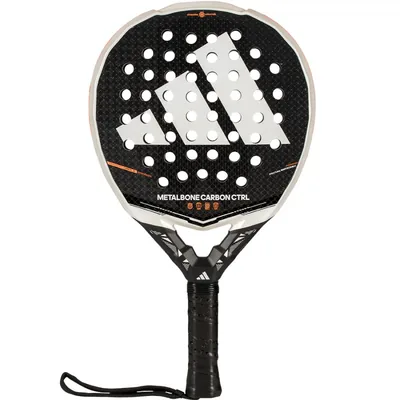
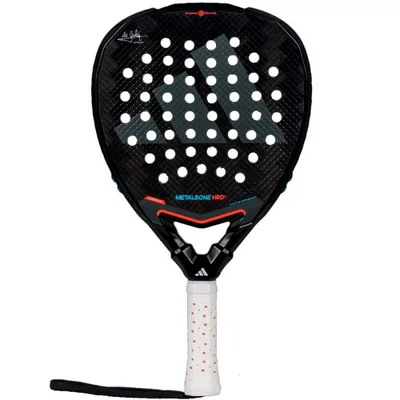
Next to its stiffer sibling, the Metalbone HRD 2026, the standard version is the easier and more forgiving of the two. In return, it leaves you less room to judge ball speed. If you put precision ahead of ease, the HRD will suit you better.
Against rackets of similar stiffness, such as the Vertex or the AT10 18K, it has more pop and gets the ball out with a shorter swing, although both of those move more freely in the hand.
Frequently asked questions
- What racket does Alejandro Galán use?
- Alejandro Galán plays with Adidas's Metalbone 2026. It's a head-heavy, diamond-shaped racket aimed at attacking players, with an enormous amount of ball exit.
- Is the Metalbone 2026 stiff or soft?
- It sits in the medium-soft range. There's no harshness on contact, it reacts quickly, and impacts have a deep, full sound.
- What's the difference between the Metalbone 2026 and the Metalbone HRD?
- The HRD is stiffer and needs a faster arm to get the most out of it. The standard model delivers power for less effort and forgives more, but gives you less control over ball speed.
- Is the Metalbone 2026 hard to control?
- Yes, that's its biggest demand. The ball comes off so fast that every touch shot needs a braked swing. On the plus side, smashing takes hardly any effort.
- How much does the Metalbone 2026 weigh?
- Between 345 and 372 g, with a head-heavy 272 mm balance. That's on the lighter side of medium, but with the mass sitting in the head it feels heavier in the hand than the number suggests.