







PadelGuru analysis
Verdict
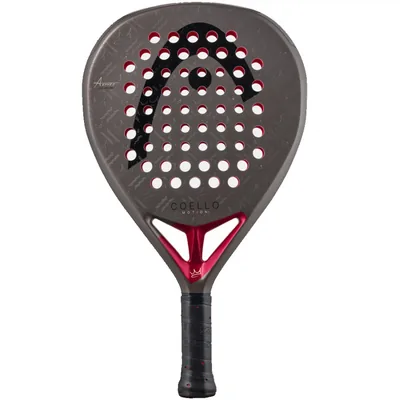
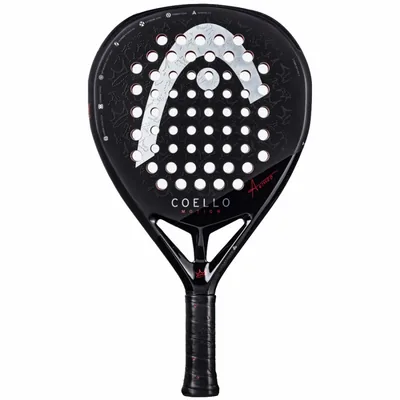
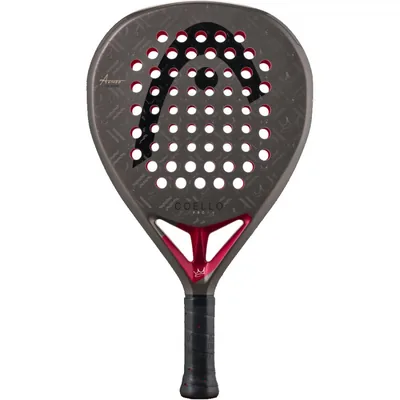
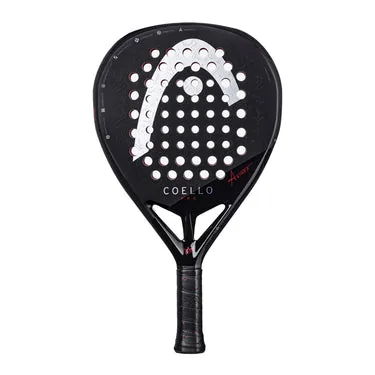
The Head Coello Motion 2026 is one of the most complete rackets in Head’s range this season. We recommend it to advanced players who do a bit of everything on court and don’t want to carry a demanding racket built only for smashing. The ball comes off the face easily from anywhere on court, and the racket performs at the baseline, at the net and in the air, as long as you supply the control.
It’s a diamond-shaped racket with a medium feel that does a lot of the work in getting the ball over the net. That same liveliness means you have to measure your shots once the pace picks up. If your game is all about hitting flat at full speed, there are harder-hitting options out there.
- Best for
- Advanced all-court players who want to get the ball over with no effort and attack with the bandeja and the x3 smash.
- Not for
- Players who need a very controllable racket at high pace, or who live off the flat smash at full power.
Strengths
- Gets the ball over from the back of the court with very little effort
- Deep bandejas without a big preparation
- The head-heavy balance helps lift the ball on the x3 smash
- Quicker to move than the Coello Pro and the 2025 version
- Medium feel with no harshness, plus a soft end cap
Weaknesses
- At high pace the odd ball flies long if you hit firmly
- Block volleys lose control if you squeeze the grip too hard
- Lacks punch on the flat smash at full power
- The 3D textured face is subtle for heavy spin players
01 Baseline: easy depth until the pace rises
From the back of the court this is a racket you can trust. The ball crosses the net with very little effort, so defending off the back glass or sending up a deep lob doesn’t require a full swing. With its Power Foam core and medium feel, it sends the ball back with plenty of life without feeling stiff.
The catch comes when rallies speed up. At a fast pace the core turns explosive, and if you hit firm and hard from low down, the odd ball sails long. When the ball arrives with pace, it pays to guide it more and grip less.
02 Volleys: quick on the attack, fussy on the block
On attacking volleys it feels fast and punchy: the ball leaves the face with intent, and the medium feel takes nothing away. It weighs 350 to 370 g with a head-heavy balance of 268 mm, yet in quick changes of direction and volley exchanges it moves better than you’d expect from a diamond-shaped racket, even if the weight in the head is still noticeable.
The block volley is where it asks for more precision. Block with a very tight hand and control suffers. When you’re stretched it still moves freely; what it punishes is arriving late with the head trailing, because then the ball comes off too flat.
03 Overheads: deep bandejas and a smash that climbs
Bandejas gain depth with little effort, and the vibora works better than the racket’s profile suggests, with good ball speed. The key is dropping the head at contact: if you don’t, the ball tends to go straight into the back glass.
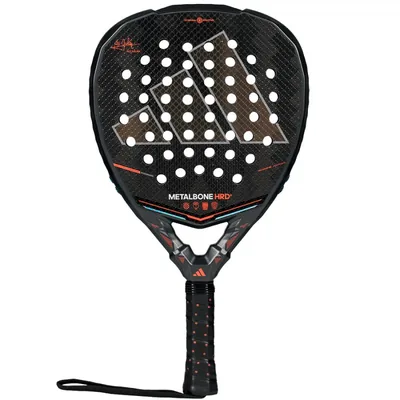
On the smash, the head-heavy balance helps the ball climb, and the x3 smash is where you notice it most. Power comes easily, but this isn’t a racket for players who live off the flat smash: it isn’t especially stiff, and when you go all out the response doesn’t grow in line with the effort. For pure hitting power it sits slightly below the Metalbone or the Fenix Elite, though above the EA10 Ventus Hybrid.
04 Medium feel, never harsh
The feel is medium, perhaps a touch firm, but never harsh. You feel the ball slightly less than with drier rackets such as the Neuron 0.2 or the EA10 Ventus Hybrid, and it sits halfway towards the bouncier rackets. The Carbon Hybrid face fits that middle ground, and the soft end cap, with a replaceable cord, softens the sensations on baseline shots.
The 3D textured face is subtle: it gives grip and some spin, but it’s not among the most pronounced. If you slice the ball a lot, you’ll miss a rougher face.
05 The smart pick of the Coello range
For most players we think it’s the best bet in the family, ahead of the Coello Pro 2026 unless you finish points with the flat smash. In concept it’s as complete as the Stress Motion but easier to move, and it handles better than the Tritón with the 30 core or the Fenix Elite.
It’s designed for advanced players, though an intermediate-to-advanced player with solid technique will also get a lot out of it.
Frequently asked questions
- Is the Coello Motion stiff or soft?
- It's medium in hardness, leaning slightly firm. There's just enough cushioning to keep impacts from feeling dead, while the face still gives a lively response.
- Which is better, the Coello Motion or the Coello Pro?
- For most players, the Motion: it's easier to handle, especially at the net, and more forgiving in defence and on shots hit without much force. The Pro mainly makes sense if your points end with a hard, flat smash.
- Is the Coello Motion heavy?
- It's less heavy than top-loaded. At 350 to 370 g the weight is mid-range, but the 268 mm balance keeps it out of the quickest group of rackets to swing, although it still moves more easily than the Coello Pro.
- What's new in the Coello Motion 2026 compared with the 2025?
- The biggest change is handling: it's noticeably freer to move from the back of the court than last year's model. The core is also a little livelier at medium speeds, while the feel stays in the medium range with no sudden change in sensations.
- How good is the Coello Motion for the x3 smash?
- Very good. This is the shot that benefits most from the weight in the head, since the ball gets up easily and you don't have to force your swing to find power.