







PadelGuru analysis
Verdict
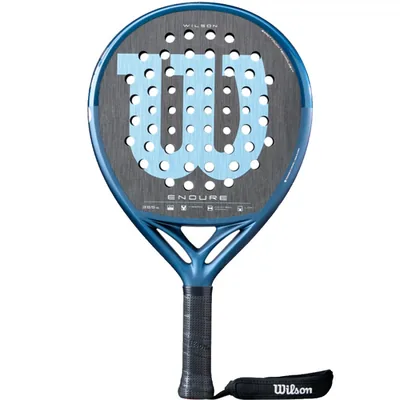
The Wilson Endure V1 2026 is a good buy for the intermediate all-court player who would rather place the ball than hit it hard. The ball goes exactly where you send it, and the direct response lets you vary the pace with real precision. What it won’t do is give you free power: to make the ball travel, you have to swing through the shot and find the middle of the face.
We see it as a racket for building the point rather than finishing it in one shot. If your game is about placement, purposeful volleys and waiting for the right ball, it is equally reliable in every part of the court. If you win your points with the smash, much of the pace will have to come from your own arm.
- Best for
- Intermediate all-court players who care more about placing the ball and controlling the tempo than about hitting hard.
- Not for
- Anyone after easy smash power or a racket that does the work for you when you're digging the ball out of the back glass.
Strengths
- Excellent pace control from the back of the court
- Faithful volleys: the ball lands at the depth you choose
- The textured face grips the ball even in cold, damp conditions
- More forgiving than the Endure Pro high on the face
- Easy to swing through long runs of bandejas
Weaknesses
- Offers little help on the smash unless you hit the centre
- Bandeja and vibora lack bite
- Makes you push the ball harder in defence
- The stock grip is fairly thick
01 Baseline: measured pace over raw push
From the back it is a very comfortable racket because the ball doesn’t fly off the face: you can change pace knowing where it will land. The Control Foam core and UD Carbon face give a direct, lightly damped response, and that dryness is exactly what lets you judge every shot.
The trade-off shows up in defence. When the ball arrives fast and you have to dig it out of the back glass, the Endure V1 moves freely, but you have to push the ball harder to get the same depth as a racket with more ball exit. It makes for a more technical style of defence, one that rewards a well-prepared swing.
02 At the net: true response, depth on demand
The net is where its character makes the most sense. Sitting halfway between dry and lively, it sends volleys out with exactly the depth you’re looking for. At 355 to 375 g with a medium 260 mm balance, it handles comfortably in quick exchanges, although it isn’t the most agile racket in its family.
It helps less when you want to put the ball away from the net. Loading up heavy spin takes effort and the ball doesn’t pick up as much speed as with more attacking rackets, so finishing the point calls for a full, well-positioned stroke.
03 Bandeja and smash: accuracy first, punch second
The bandeja and the vibora come off controlled and easy to place, thanks to a good balance between liveliness and sweet spot. What they lack is bite: the ball hurts your opponents less than it would with a more attacking racket, and if you’re not coming from a round racket, it will take you a while to find the shot. On the plus side, it moves so comfortably overhead that it won’t tire you out even when you string lots of bandejas together.
On the smash it is decent, nothing more. The restrained balance doesn’t add that extra momentum, and the ball sometimes comes off with less pace than expected, which forces you to hit more centrally and costs you leverage. It handles fast balls well, and if you’re explosive and catch it in the middle, the ball goes a long way; away from the centre, it loses ball exit.
04 Feel and finish: an unusual texture
It is a comfortable racket with a medium feel and a slightly dry edge: the ball doesn’t sink into the face and the sensation is direct, so you can clearly feel what you’re doing on every shot.
The sandy finish is nothing like the usual one. To the touch it resembles a nail file, which feels odd for the first few days, but on cold, damp days it stops the ball from slipping, just when other faces lose their grip. This texture is also designed to last longer than a conventional sandy finish. The grip is long, at 13 cm, but the stock handle is thick; if you have small hands, bear that in mind before adding overgrips.
05 The middle ground of the Endure range
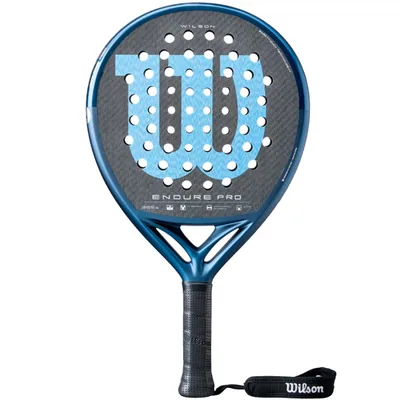
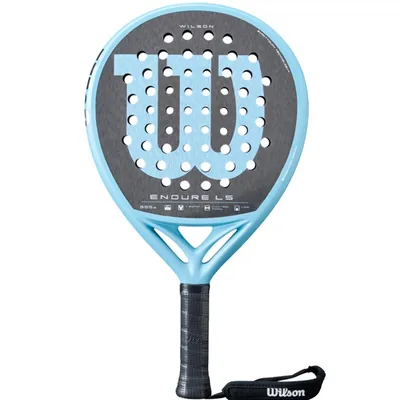
Of the three Endures, this is the most balanced to our mind. The Endure LS is easier to handle and more damped, with the ball sinking further into the face and a slightly larger sweet spot; the Endure V1 gives up some of that ease to gain a more direct feel and a bit more reach on the smash when you hit hard. The Endure Pro goes to the other extreme, with a smaller sweet spot and power that is harder to extract, whereas this one is more forgiving when the ball strikes high on the face.
We recommend it to intermediate players who already have their technique in place and want a racket that won’t alter their trajectories. If maneuverability is your top priority, look at the LS first; if what you’re missing is punch, neither of them will hand it to you.
Frequently asked questions
- Is the Endure V1 a stiff or soft racket?
- It sits in the middle, leaning towards medium-stiff. It doesn't cushion the ball the way a soft racket does, and it feels firmer and more direct than the Endure LS.
- Endure V1, Endure LS or Endure Pro: which should I choose?
- Go for the LS if you want the easiest to swing and the Pro if you want the most demanding. The Endure V1 is the in-between option and the one that performs best all over the court.
- How good is the Endure V1 for smashing?
- It does the job without lending a hand. You need an explosive swing and a clean, central strike to get real pace on the ball.
- What is the Endure V1's face texture like?
- Coarse, almost like sandpaper, and very different from a typical sandy finish. Its big advantage is that it keeps hold of the ball in cold and humid weather.
- What level is the Endure V1 for?
- It suits intermediate players with solid technical foundations best. Beginners may find the ball doesn't come off the face easily enough when defending or smashing.