







PadelGuru analysis
Verdict
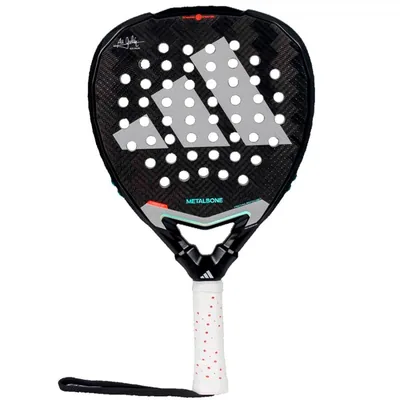
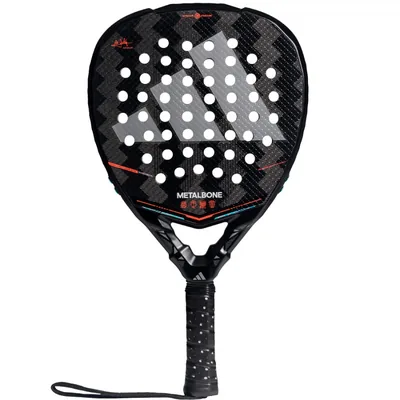
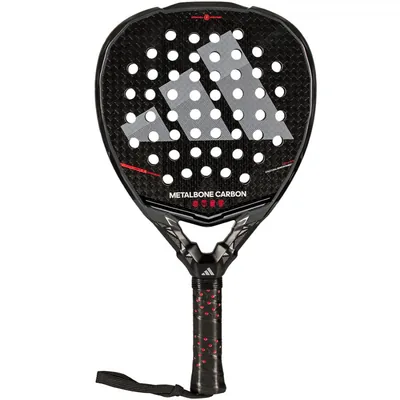
The Adidas Metalbone 3.4, Alejandro Galán’s racket, is an attacking option built for advanced players who want overhead punch without the harshness of a stiff feel. Its design pairs a head-heavy balance with an extended handle to create extra leverage on the smash and the vibora, backed by a highly reactive core that sends the ball off the face with ease.
That extra swing weight takes a toll when defending at high speed or trading quick volleys at the net, where it becomes more demanding to maneuver. We recommend it to offensive players who put comfort and easy depth ahead of pinpoint control on block volleys.
- Best for
- Advanced attacking players looking for easy overhead power, a generous sweet spot, and a comfortable medium-soft feel.
- Not for
- Players who prioritize control on fast block volleys or need a whippy, agile racket for quick defense and rapid net exchanges.
Strengths
- Lively ball exit at low speeds and even in cold conditions
- Extra leverage on smashes and viboras thanks to the longer handle
- Large, forgiving sweet spot for a diamond-shaped racket
- More maneuverable and forgiving from the baseline than the Metalbone HRD+ 3.4
- Raised 3D textured finish that grips the ball well despite the glossy surface
Weaknesses
- Too much rebound when blocking fast balls at the net
- Somewhat heavy to move during quick direction changes and tight defense
- Stiffens up and loses ball exit in the upper-middle area of the face
- Side-exiting wrist cord forces you to play with the same face every time
01 Back of the court: effortless ball exit that can sail long
From the baseline, the Soft Performance core sets the tone: its high reactivity launches the ball effortlessly at low speeds, even on cold winter days. When the rally speeds up, the ball does not sink excessively into the core either, though that generous rebound requires a measured swing—follow through too much and it is easy to send the ball straight into the back glass.
Despite offering a large sweet spot for a diamond-shaped racket, its head-heavy balance penalizes you in tight defensive situations. Digging balls out at your feet or turning quickly in the corners takes more effort than with rivals like a Vertex or an AT10 Attack 18K, though it handles more smoothly from the back than its stiffer sibling, the Metalbone HRD+ 3.4.
02 Volley: aggressive on the front foot, unruly on blocks
At the net, it shows two very different sides depending on who holds the initiative. When you set your feet in time to strike out in front, the combination of the aluminized 16K carbon face and the head-heavy balance lets you punch deep volleys with a full, deep sound.
The trouble starts in fast reflex exchanges and when blocking heavy drives from your opponents. Because it is somewhat heavy to move, you arrive a fraction late on direction changes, and the very high ball exit makes the ball pop off the face too much on block volleys, taking away precision when you just want to absorb pace.
03 Overhead game: easy leverage on viboras and x3 smashes
Up top is where its construction really shines. The momentum generated by the 13 cm handle and the more compact throat creates noticeable leverage on bandejas and viboras, driving the ball deep with pace without having to force your arm. The 3D textured finish, while subtle to the touch, bites the ball well and prevents slipping despite the glossy faces.
On the smash, it generates power with ease, especially on the x3 smash, where the reactive core helps kick the ball up and out. It only has two clear limits: on flat smashes it absorbs a bit more impact and has a lower power ceiling than the Hard version; and if you make contact in the upper-middle zone just below the tip, the response turns much stiffer and gives noticeably less ball exit than in the center.
04 Feel and details: comfortable impact let down by the strap
Its medium-soft feel is easy on the arm and delivers a more elastic response at impact than most attacking rackets. However, one detail on the handle hurts everyday usability: the wrist strap exits from the side of the butt cap and feels awkward against the wrist, which also forces you to hit with the same face all the time and hurts long-term durability.
05 How it compares to the Metalbone 3.3 and the Hard version
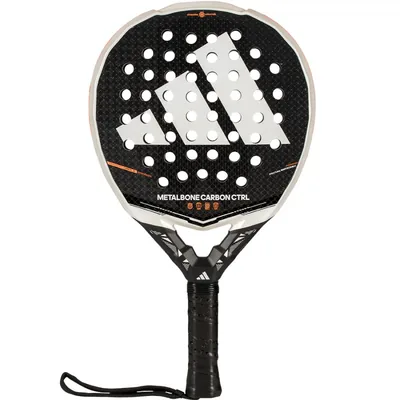
Compared to the previous year’s Metalbone 3.3, this edition takes a clear step toward offense with a more pronounced diamond-shaped racket profile, a higher balance, and a slightly livelier core. That translates into heavier punch and faster ball speed overhead, at the cost of a slightly smaller sweet spot and less agility in defense and rapid volley exchanges.
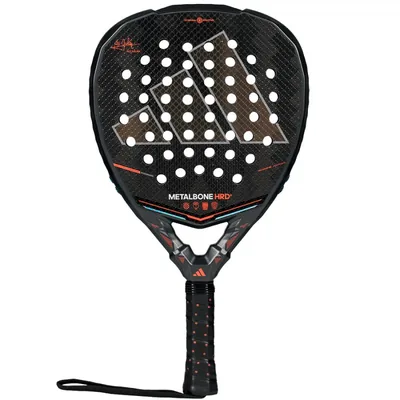
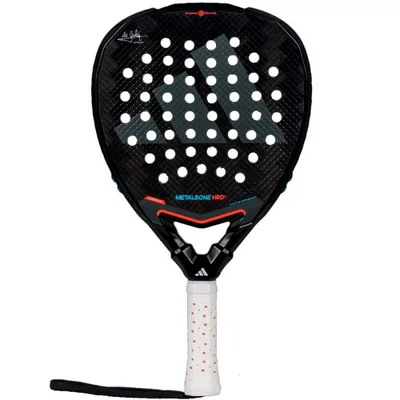
If you are torn between this and the Metalbone HRD+ 3.4, the choice comes down to your arm strength. The Soft Performance core version is lighter, carries a lower balance, and gives you a slightly larger sweet spot, whereas the Hard version demands more arm but rewards you with better control when blocking heavy shots and a higher ceiling on flat smashes.
Frequently asked questions
- What racket does Alejandro Galán use?
- Alejandro Galán plays with the Metalbone 3.4, an attacking diamond-shaped racket built with an extended handle, a medium-soft feel, and plenty of ball exit.
- What is the difference between the Metalbone 3.4 and the Metalbone HRD+ 3.4?
- Because the Metalbone 3.4 uses a Soft Performance core, it feels gentler on the arm, moves more easily, offers a wider sweet spot, and launches the ball with less effort at slow speeds. The HRD+ 3.4 is stiffer and more physically demanding, but holds its line better on block volleys and hits harder on flat smashes.
- How does the Metalbone 3.4 change compared to the Metalbone 3.3?
- The 2025 update introduces a longer grip, more weight toward the head, and a slightly livelier core. Those tweaks give it more overhead firepower and faster rebound than the Metalbone 3.3, though it takes more effort to get around in defense and during quick exchanges at the net.
- How does the Metalbone 3.4 handle block volleys?
- It requires soft hands when opponents hit hard at you. While its bouncy core is a big help on slow defensive shots, fast volleys and heavy baseline drives rebound strongly off the face and can easily fly into the back glass if you do not shorten your swing.