







PadelGuru analysis
Verdict
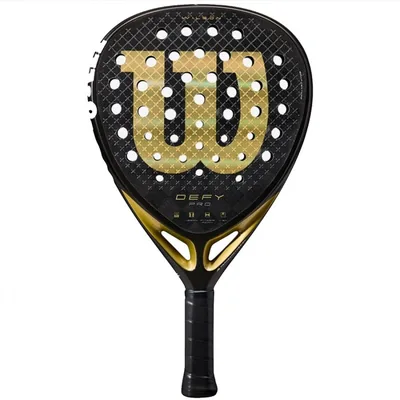
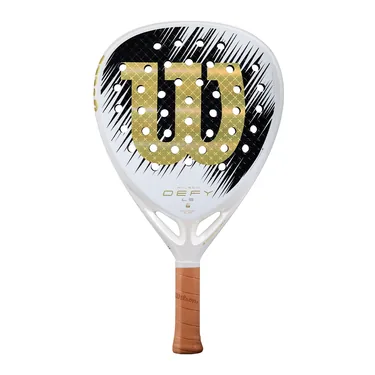
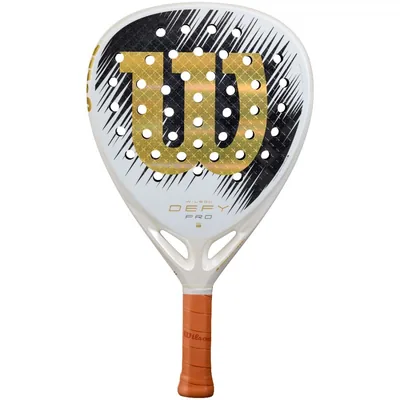
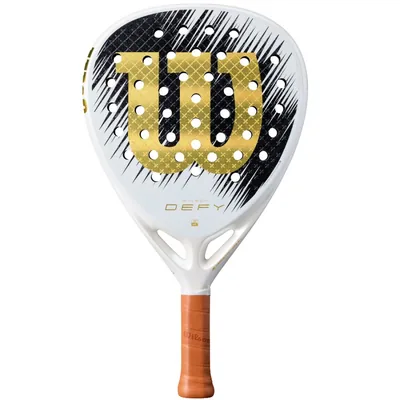
The Wilson Defy Pro V1 is a good buy for the advanced attacker who already has a stroke of their own. Control is excellent, and on the smash it accelerates the ball hard. The trade-off is that it does little for you at a slow pace: if you don’t commit to the swing, the ball comes off weak. This is Javier Garrido’s racket.
We recommend it to players who would rather steer the ball themselves than let the racket do the work. And for a stiff diamond-shaped racket, it handles better than you might expect.
- Best for
- Advanced attackers who want to smash hard without giving up precision at the net.
- Not for
- Players who need the racket to supply depth on defence by itself, or who want a soft feel.
Strengths
- Smash with plenty of ball acceleration
- Very precise control: the ball goes where you send it
- Answers with real pace when you push through a volley
- Moves well on defence for a diamond-shaped racket
- The 3D raised finish keeps the spin even once the sandy finish wears
Weaknesses
- Little ball exit at medium-to-slow pace
- Stiff feel, the firmest in the Defy family
- Grip a little thicker than usual
01 Baseline: you supply the depth
From the back of the court, this racket won’t help you. At medium-to-slow pace there’s hardly any rebound off the face, so a deep lob or a heavy off-the-wall attack (bajada) means really following through on the stroke. What you give up in assistance you get back in control: the ball doesn’t fly long on you, and you can dose it precisely.
For a diamond-shaped racket, it moves well on defence. It weighs between 365 and 375 g with a fairly high 265 mm balance, but the design aims to keep it from feeling too head-heavy or loading up the arm, and in the hand it feels lighter than the Blade. That doesn’t make it a light racket, though: in long rallies off the back glass it still asks for some arm.
02 Volley: precise on the block, punchy when you push
At the net the Defy Pro has two sides. Block without loading up the shot and the ball comes off controlled, easy to place with great precision, almost as if the racket were an extension of your hand. Push through it and the Power Foam core and 15K Carbon face react sharply, firing the ball out, which is very handy for closing the point with an aggressive volley.
That gap between blocking and accelerating is exactly what an attacking player needs: you decide when to raise the pace, not the racket.
03 Smash: more acceleration than the Blade V3
The smash is its best shot. It lets you accelerate the ball a lot, more than the Blade V3, and the sweet spot doesn’t sit very high on the face, so you don’t have to hunt for one particular area to get power on the shot.
On the bandeja and the vibora, the 3D textured face with its sandy finish grips the ball well and helps you slice through it with spin.
04 Firm feel and a grip for big hands
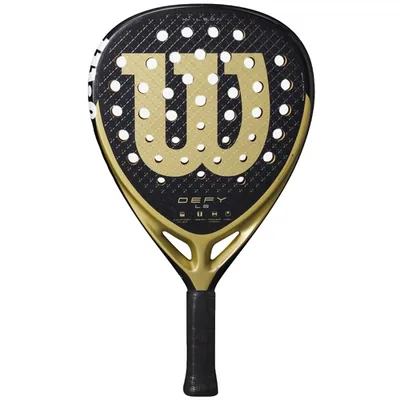
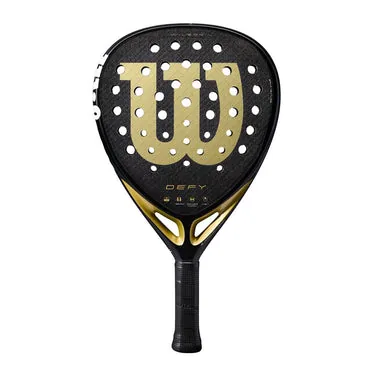
This is a stiff racket, the firmest of the three Defy models, though it stops short of being extremely rigid: the core is the same across every version in the family.
The grip is 13 cm long, slightly more than the Blade’s, and a bit thicker than average compared with other brands, which makes it comfortable for big hands. The double texture also has a practical upside: when the sandy finish wears down with use, the 3D raised finish is still there and the racket keeps its ability to generate spin.
Frequently asked questions
- What racket does Javier Garrido use?
- Javier Garrido plays with Wilson's Defy Pro, a stiff-feeling diamond-shaped racket built for attacking and smashing.
- Is the Defy Pro stiff or soft?
- Stiff, though not to an extreme. Thanks to its 15K carbon face, it's the firmest-feeling model in the Defy range.
- How much ball exit does the Defy Pro have?
- Not much on soft shots, and that's a big part of where its control comes from. Put some arm into a volley or a smash, though, and it does send the ball off quickly.
- How is the Defy Pro different from the Wilson Blade?
- The Defy Pro carries less weight in the head and is easier to move than the Blade. Its grip is slightly longer, and overhead it gets more speed on the ball than the Blade V3.
- What is the grip like on the Defy Pro?
- It's a standard size but a bit thicker than most. Players with large hands will appreciate it.