







PadelGuru analysis
Verdict
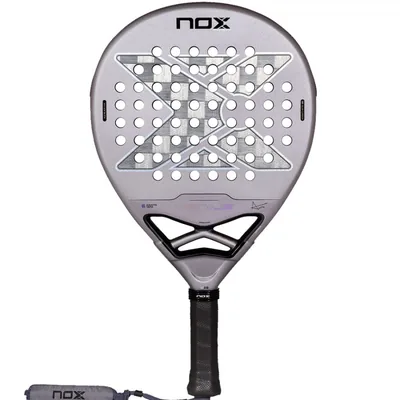
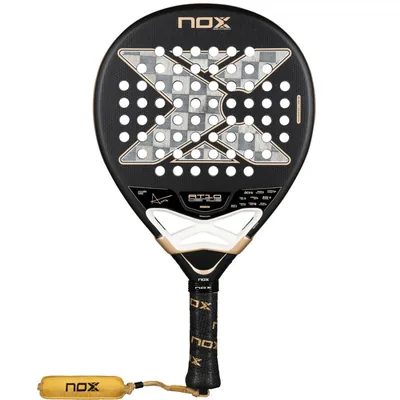
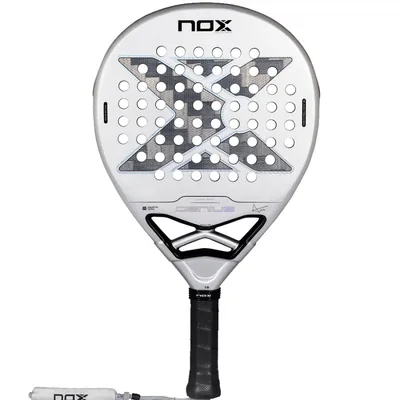
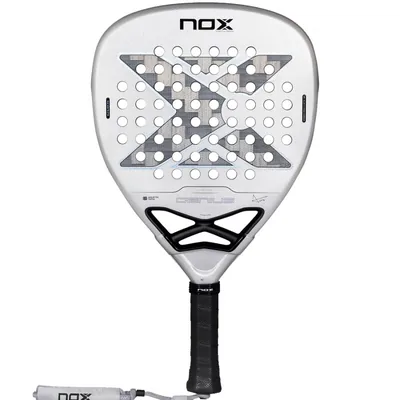
The Nox Genius 18K Alum 2027, Agustín Tapia’s racket, is the easiest to play in its collection. We recommend it to players who spend much of the match defending and volleying. It moves very quickly, the ball comes off the face with little effort, and it forgives rushed contact.
The smash is a different matter. It needs more technique than you’d expect from a racket this comfortable everywhere else. If your game is built on heavy viboras and x3 smashes, you’ll have to work on your swing or add the weights that fit in the head.
- Best for
- Players who defend and volley a lot and want an easy racket that still has plenty of ball exit.
- Not for
- Big hitters who want the racket to put the ball out x3 without supplying the technique themselves.
Strengths
- Very quick to move in defence and at the net
- Big sweet spot that helps on tough defensive shots
- Deep balls with little effort at medium pace
- Takes 2 g and 4 g weights in the head
- VCS anti-vibration system in the grip to protect the elbow
Weaknesses
- Demanding x3 smash: needs central, slightly low contact
- Bandeja and vibora lack weight unless you finish with the tip down
- Fast, flat volleys tend to fly into the back glass
- Feels harsher at the tip when the pace picks up
01 Baseline: fast, forgiving defence
From the back of the court, no racket in the collection makes you feel at home sooner. It weighs 360 to 375 g, but with a medium 260 mm balance the head barely drags: when the ball arrives awkwardly, you can still speed up the swing without getting caught late. The sweet spot is big and well centred, which is a real help when you have to dig out difficult defensive balls.
At medium and low pace the ball comes off easily and you keep a sense of control. The 18K Alum Carbon face releases the ball more readily than the 12K versions in the range, so defending off the back glass takes little effort. If your balls are drifting too high, the head weights help you control the height, at the cost of some maneuverability.
02 Volley: quick and forgiving, careful with flat shots
The net is where its handling shines most. It gets there in time even when you’re out of position, gives you room to prepare the shot a little more, and feels good from the very first hit. On block volleys comfort is the priority: it sends the ball back without you having to put much arm into it.
Trouble starts when the exchange speeds up. A fast volley hit flat in the centre of the face flies further than you’d expect and can end up in the back glass. The same happens if you overload the shot: the racket hands you speed for free, so you need to measure your strength to stay in control.
03 Overheads: agile, but you supply the weight
On the bandeja and vibora it’s very agile, forgiving and easy on the arm. At medium pace the ball reaches the back of the court with little effort. What it lacks is weight on the ball: it puts less into the shot than the attacking rackets in the collection. When the pace rises and you hit hard in the centre, the ball leaves very fast, but if you don’t finish the stroke by bringing the tip down it travels straight and tends to float. Adding weight to the head gives it more leverage and goes a long way towards fixing this.
The smash demands technique. As a hybrid racket whose balance doesn’t load the head, it won’t help you put the ball out x3: the power and the spin have to come from you. Contact also has to be central and slightly low, because hitting high on the face doesn’t pay off. It works better on the hard, flat smash that uses the bounce.
04 Feel: firm without punishing the elbow
With the MLD Black EVA core, the feel is medium with a touch of firmness, yet docile and undemanding. When the game speeds up, the response changes depending on where you hit: at the tip it feels harsher, and a little lower down the ball comes off with more power. The faces have a 3D textured surface with a sandy finish.
If you’ve had elbow trouble with stiffer rackets, the VCS anti-vibration system, an elastomer built into the grip, may help.
05 Quicker than the Vertex, less cutting than the attack models
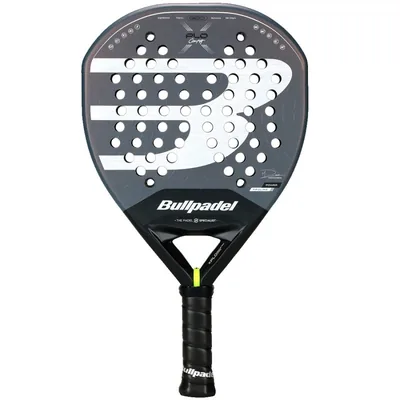
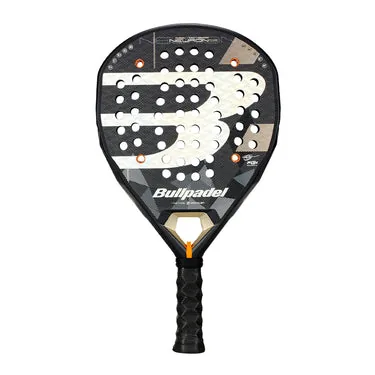
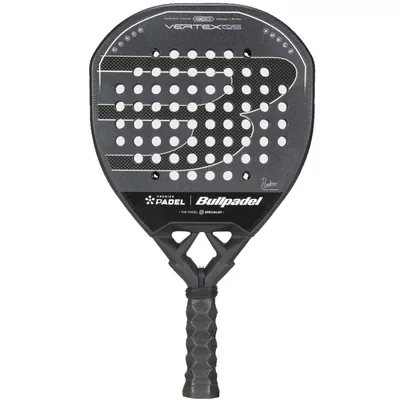
We see it as the most complete racket in the new Genius range and a benchmark among medium-stiffness rackets. Compared with the Bullpadel Vertex, a diamond-shaped racket with a harsher feel, it moves better and has more ball exit.
If you’re a natural smasher or don’t want to correct the finish of your vibora, one of the attack versions in the collection will suit you better.
Frequently asked questions
- What racket does Agustín Tapia use?
- Agustín Tapia plays with Nox's Genius 18K, a medium-stiffness hybrid racket whose strengths are defending and playing at the net.
- Is the Genius 18K stiff or soft?
- It sits in the middle, leaning slightly firm. Even so, it's comfortable to play without needing perfect contact on every shot.
- How good is the Genius 18K for smashing?
- It's stronger on powerful flat smashes that use the bounce than on x3 smashes. To get the ball out of the court, you need to strike centrally and a little low and generate the spin yourself.
- What are the head weights on the Genius 18K for?
- You can fit 2 or 4 g in the head. They give you better height control on defensive balls and more weight on the vibora, though the racket becomes a little less maneuverable.
- Is the Genius 18K good if I have elbow pain?
- It can be. The VCS system in the grip dampens vibration and is designed for players who've had discomfort with stiffer rackets.