






PadelGuru analysis
Verdict
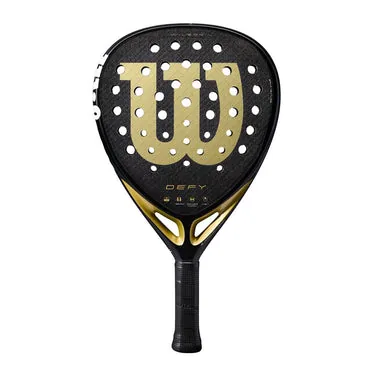
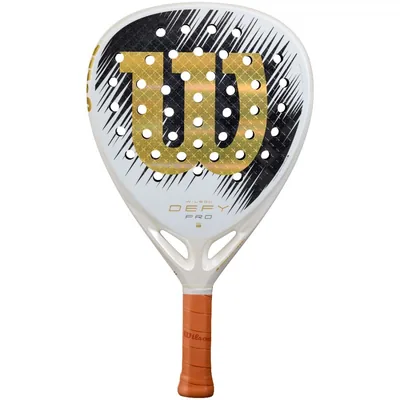
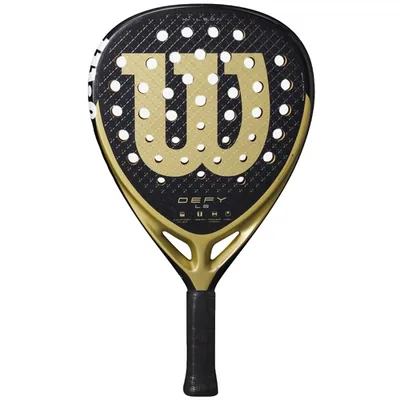
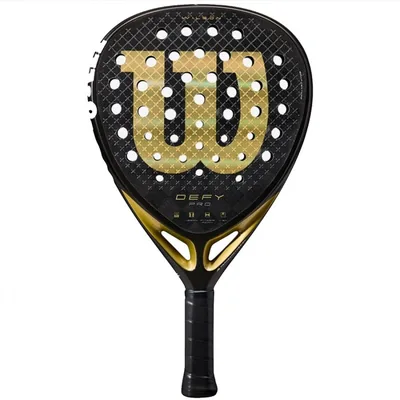
The Wilson Defy V1 is a very sensible buy for the advanced attacker who wins points with spin and placement rather than raw power. For a diamond-shaped racket it’s undemanding and easy to move, and its textured face is one of the best of 2025, something you feel on every spin shot.
Where it runs out is the flat shot hit at full power. Swing all-out and the racket soaks up part of the impact, so the ball doesn’t come off the face as progressively. We see it as a racket for players who’d rather control the medium-pace game than settle every point with a flat smash.
- Best for
- Advanced attackers who play with spin on the bandeja, vibora and topspin smash, and still want to defend comfortably from the baseline.
- Not for
- Players who finish points with full-power flat smashes or want a racket with lots of ball exit.
Strengths
- Dual texture that puts plenty of spin on the ball
- Forgiving from the back of the court for a diamond-shaped racket
- Sliced volley that barely sits up off the back glass
- Very effective topspin smash at medium speed
- Easy to move, with enough weight behind the volley
Weaknesses
- Flat smash at full power loses distance
- Harsh and slightly imprecise on very fast block volleys
- You have to push the ball more than with rackets that offer more ball exit
01 Baseline: an attacking racket that doesn't punish you
From the back of the court, this is one of the least punishing attacking rackets around. It’s comfortable and moves freely, and the sweet spot is well used for its shape, so a ball you don’t catch dead centre doesn’t turn into a gifted error. At medium pace it defends very reliably.
Ball exit is moderate. Compared with other attacking rackets, it helps a little more to move the ball on soft shots without giving up control. Compared with a racket that has more ball exit, it asks you to follow through and push the ball a bit more. The Power Foam core and 3K Carbon face explain that middle ground: the ball comes off controlled, not fired out.
02 Volley: weight in the hand and bite on the slice
At the net it carries more weight than its balance would suggest. At 360 to 370 g with a medium-high 265 mm balance, the flat volley gains depth as soon as you put your arm into it, while at medium pace the racket is easy to handle. The sliced volley is its best shot up here: it comes out with power and the ball barely rises after hitting the back glass.
The textured face also helps on drop shots, whether you want to keep it short or angle it out towards the side door. The weak point shows up on very fast block volleys. The feel turns fairly harsh there and the racket doesn’t quite respond to what your hand is asking, so you lose some precision.
03 Overheads: spin over brute force
On the bandeja the ball comes off with heavy spin and grips nicely, and at medium pace depth arrives almost effortlessly. On the vibora it responds with real punch if you genuinely accelerate, although it loses some speed if you try to brush the ball too much. Players who don’t swing hard will find plenty of power. Big hitters, on the other hand, will notice the ball stays on the face for an instant and doesn’t come off as progressively.
The smash needs splitting into two shots. The topspin smash at medium speed is excellent: with little effort the ball leaves with lots of spin and kicks up high. The flat smash at full power is a different story. The racket absorbs part of the impact and, if you aim it at the middle or centre of the back glass, the ball doesn’t travel as far as it does with more powerful rackets. You also give up some control when you swing all-out.
04 Medium feel, a touch harsh, and an outstanding texture
The feel is medium, with a stiffness similar to the Babolat Veron, and it leans slightly towards harsh. Even so it isn’t uncomfortable: from the baseline it sends good feedback to the hand, and on flat shots it combines comfort with punch.
The finish is its signature. The 3D textured face with a sandy finish is very noticeable and grips the ball like few rackets this season. The 13 cm handle, a little longer than usual, is welcome on a racket whose sweet spot is so well used.
Frequently asked questions
- Is the Defy V1 a stiff or soft racket?
- Neither: it sits in the middle, leaning towards firm. Rallies from the back feel comfortable, but it gets harsher when the ball arrives at high speed.
- How good is the Defy V1 for smashing?
- It depends on the type of smash. A medium-speed topspin smash is one of its strongest shots, but if you want to end the point with a flat, full-power hit, it comes up a bit short on distance.
- How much spin does the Defy V1 give?
- A lot. Its dual texture ranks among the most effective of 2025, paying off on slices, drop shots and bandejas, and it kills the bounce off the glass after a volley.
- Is the Defy V1 heavy?
- It's neither light nor heavy, weighing 360 to 370 g with a 265 mm balance that's medium-high without being properly head-heavy. That keeps it balanced and easy to handle.
- Is the Defy V1 hard to control?
- Not at medium pace, where control is one of its strengths. When you swing flat out, especially coming from a stiffer racket, you'll notice a bit more ball exit and some loss of accuracy.