
Babolat Viper Soft Juan Lebron 3.1
- Year
- 2027
- Shape
- diamond
- Weight
- 355–375 g
- Balance
- 27 cm
- Grip
- 12.5 cm
- Texture
- 3D
- Core
- Black EVA
- Surface
- Soft Carbon
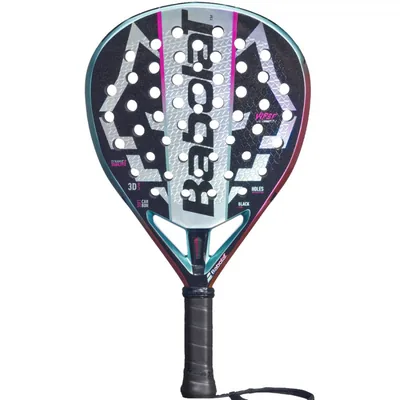
Features
PADELGURUEstimated from reviews
No shop price right now
We can’t find this racket on sale in United States right now. These similar alternatives are available:
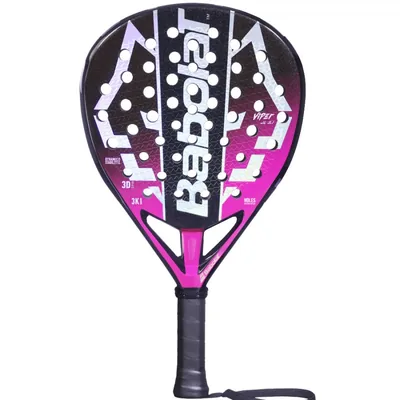
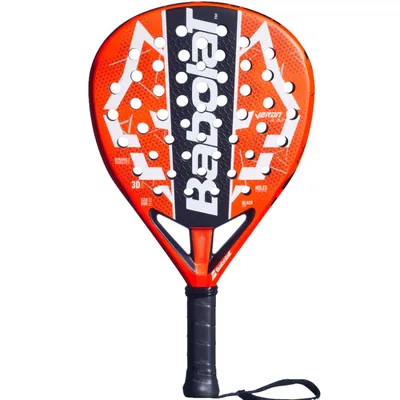
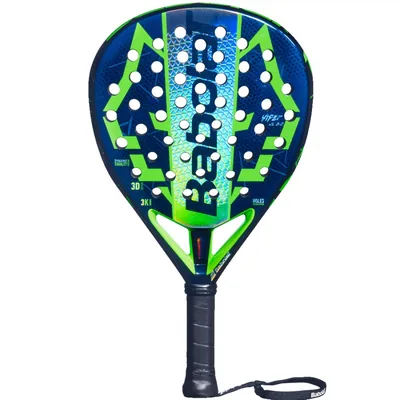
The Viper Soft 3.1: the more forgiving feel in the Lebrón range
PadelGuru score: 7.3/10
PadelGuru analysis
Verdict
The Babolat Viper Soft Juan Lebron 3.1 is the most forgiving option in Juan Lebrón’s attacking line, built for players who want his offensive mold without the extreme stiffness of the standard model. Even with that friendlier face, it remains a demanding diamond-shaped racket: it has a small sweet spot, very little ball exit at slow pace, and requires clean technique to find the center on every shot.
Our verdict is clear: it suits skilled players who always accelerate through the ball and want more feel than the classic Viper gives them, but it punishes you the moment your footwork slows down or you are stretched in defense.
- Best for
- Technical attacking players who want Lebrón's mold with a softer, more forgiving feel than the standard Viper.
- Not for
- Players who need help defending at slow pace, a generous sweet spot, or an easy-to-maneuver racket.
Strengths
- More ball feel and a wider margin on the smash than the standard Viper
- Lets you swing out with confidence on the vibora and bandeja
- Puts heavy weight on the ball when volleying at high pace
- Transfers energy well from the baseline once the rally speeds up
Weaknesses
- Low ball exit from the back of the court at slow or medium pace
- Small sweet spot that punishes off-center hits
- Requires a firm push on block volleys to keep the ball from dropping short
- Head-heavy balance demands a strong arm during quick changes of direction
01 Back of the court: requires you to drive through every ball
Defending with the Viper Soft 3.1 calls for active feet and a full swing. Its ball exit is very low at slow or medium pace, so it gives you nothing for free when you are pinned against the back glass; if you just stick the racket out, the shot dies mid-court. On top of that, the sweet spot is small and quickly penalizes anything struck off-center.
The combination of a Soft Carbon face and a less dense Black EVA core than the standard Viper gives you more feel on contact and a slight extra rebound compared to its sibling. Once the rally picks up speed and you can step in and follow through, it transfers your force cleanly into the shot.
02 Volley: heavy ball when accelerating, demanding on the block
At the net, it shows two very different sides depending on whether you hold the initiative. On passive block volleys and low-pace off-the-wall attacks, it forces you to middle the ball cleanly and push through with your forearm so the shot does not die early. Its 355 to 375 g weight paired with a 270 mm head-heavy balance does no favors for maneuverability when you have to react to balls hit straight at your body.
By contrast, when you dictate the point and volley at high pace, it lets you lengthen your swing and put serious weight on the ball with control, without sending it long into the back glass.
03 Overhead game: at its best on the vibora and bandeja
Up top is where this racket makes the most sense, especially on the bandeja and the vibora. The weight concentrated in the head lets you release your arm decisively and work the ball with plenty of safety without worrying about it flying into the back wall, aided by the 3D textured finish on the faces.
On the flat smash, it delivers less raw power than the standard Viper and gives you no free speed unless you generate the arm acceleration yourself, but its extra forgiveness on contact makes it easier to get results both when hitting flat and on the x3 smash when you do not catch it dead center.
Frequently asked questions
- What racket does Juan Lebrón use?
- Juan Lebrón lends his name to the Viper Soft 3.1, a soft-feel diamond-shaped racket built for attacking players looking for extra forgiveness on contact.
- What is the difference between the Viper Soft 3.1 and the standard Viper?
- It has a softer feel that gives you better feedback on the ball and makes the smash easier to tap into, though it produces slightly less raw flat-hitting power than the standard Viper.
- What changed on the Viper Soft 3.1 compared to last year's model?
- The update over the Viper Soft 3.0 is purely cosmetic: it keeps the exact same mold with a 12.5 cm grip, the central bridge reinforcement in the throat, and identical on-court behavior.
- How does the Viper Soft 3.1 perform in defense?
- It struggles in slow rallies because the face offers very little rebound on its own, forcing you to strike the center of the racket and complete a full follow-through to clear the baseline.